
Introduction: The Illusion of “I Know Everything”
Almost every student has experienced this moment:
You finish reading a chapter…
You feel confident…
You think:
👉 “Yes, I know this topic”
But when you sit in the exam hall:
- Your mind goes blank
- You forget key points
- You struggle to structure answers
This is one of the biggest problems in studying:
👉 Recognizing information is NOT the same as recalling it.
This is where the Blurting Method becomes a game-changer.
It is one of the most powerful techniques to check whether you truly know your syllabus—or just think you know it.
What is the Blurting Method?
The Blurting Method is simple:
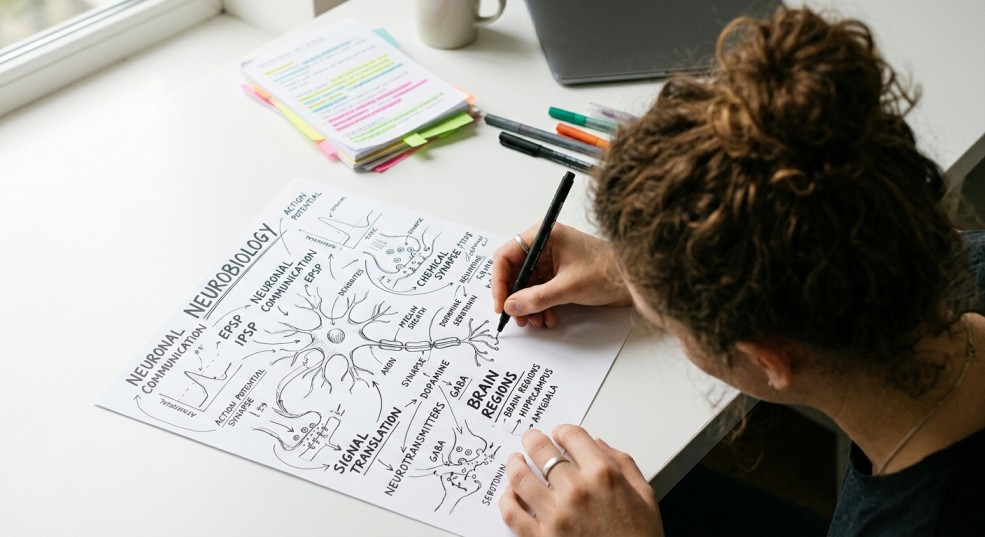
👉 You read a topic → close your book → write everything you remember.
No cheating.
No looking back.
No notes.
Just pure recall.
Why It is Called “Blurting”
Because you are literally:
- “blurt-ing” out everything from your brain
- without filtering
- without checking accuracy first
👉 It exposes your real memory strength.
Why Most Students Fail Without Blurting
Students usually study like this:
✔ Read textbook
✔ Highlight lines
✔ Re-read notes
✔ Feel confident
But this creates a false sense of learning.
Because:
❌ You are only recognizing information
❌ Not recalling it from memory
👉 Exams require recall, not recognition.
The Core Problem: Passive Study Habits
Most traditional study methods are passive:
- Reading again and again
- Highlighting text
- Watching lectures repeatedly
These make you feel productive but don’t test memory.
👉 Blurting fixes this by forcing active recall.
How the Blurting Method Works (Step-by-Step)
STEP 1: Choose a Topic
Pick a chapter or subtopic.
Example:
- Photosynthesis
- Newton’s Laws
- Cell Structure
👉 Keep it small at first.
STEP 2: Study the Topic Normally
Read the topic once or twice.
But don’t overdo it:
✔ Understand concepts
✔ Don’t memorize word-by-word
STEP 3: Close Everything
Now the important step:
👉 Close your book
👉 Put notes away
👉 Remove distractions
This is where real learning starts.
STEP 4: Start Blurring (Write Everything You Remember)
Now write:
- Definitions
- Key points
- Formulas
- Diagrams (if needed)
👉 Don’t worry about order or perfection.
Just dump your brain onto paper.
STEP 5: Compare With Notes
Now check:
✔ What you got correct
❌ What you missed
❌ What you misunderstood
This step shows your real knowledge gaps.
STEP 6: Fix and Repeat
Now:
- Fill missing information
- Correct mistakes
- Repeat blurting again
👉 This strengthens memory rapidly.
Why Blurting Method is So Powerful
1. It Tests Real Knowledge
Most study methods:
❌ Make you feel like you know
Blurting:
✔ Shows what you actually know
2. It Strengthens Memory
When you try to recall:
- brain works harder
- connections strengthen
👉 This builds long-term memory.
3. It Exposes Weak Areas
You immediately see:
- what you forgot
- what you misunderstood
4. It Improves Exam Performance
Because exams require:
✔ recall under pressure
Blurting trains exactly that skill.
The Science Behind Blurting
The Blurting Method is based on:
Active Recall Theory
👉 The brain remembers better when it actively retrieves information.
Compared to passive reading:
- Active recall = strong memory
- Passive reading = weak memory
Testing Effect
Studies show:
👉 Testing yourself improves memory more than rereading.
Blurting = self-testing.
Common Mistakes Students Make
1. Looking at Notes While Writing
❌ This defeats the purpose
2. Trying to Be Perfect
Blurting is not about neatness
It is about memory output
3. Writing Too Little
Students sometimes:
- only write headings
- avoid details
👉 That reduces effectiveness
4. Not Reviewing Mistakes
Without correction:
👉 blurting loses value
How to Use Blurting for Full Syllabus Revision
Phase 1: Topic-Level Blurting
- Break syllabus into chapters
- Apply blurting one by one
Phase 2: Mixed Blurting
Now mix topics:
- Random questions
- Mixed chapters
👉 This simulates exam pressure
Phase 3: Final Exam Blurting
Before exams:
- Quick recall sheets
- Fast writing practice
Blurting vs Other Study Methods
✔ Reading
- Passive
- Weak retention
✔ Highlighting
- Illusion of learning
- Low recall strength
✔ Rewriting Notes
- Time consuming
- Moderate benefit
✔ Blurting
- Active recall
- High retention
- Exam-focused
👉 Clearly more effective
Why Students Feel Blurting is Hard
Because:
- It exposes what you don’t know
- It feels uncomfortable
- It requires effort
But:
👉 Difficulty = learning happening
How Blurting Improves Confidence
At first:
❌ You see mistakes
❌ You feel weak
But later:
✔ You see progress
✔ You see improvement
👉 This builds real confidence—not fake confidence.
Best Subjects for Blurting
Blurting works best for:
✔ Science concepts
✔ Biology definitions
✔ History facts
✔ Economics theory
✔ Theory-heavy subjects
Less Effective for
- Pure calculations (Math heavy solving)
- Very short MCQs (still useful but different approach)
Ideal Blurting Schedule
Daily Study
- 30–60 minutes blurting per topic
Weekly Revision
- Full chapter blurting
Before Exams
- Quick recall sessions
- Mixed topic blurting
How Blurting Helps in Exams
You will notice:
✔ Faster answer writing
✔ Better structure
✔ Less forgetting
✔ More confidence
Real Student Transformation
Students who use blurting often report:
- “I thought I knew the chapter, but I didn’t”
- “Now I remember things without looking”
- “My revision time reduced a lot”
Final Strategy: Combine Methods
Best results come when you combine:
✔ SQ3R (learning)
✔ Blurting (testing)
✔ Spaced revision (retention)
👉 This creates a complete study system.
Conclusion: The Truth About Learning
Most students confuse reading with learning.
But real learning happens when:
👉 you can recall without help
Blurting removes illusions and shows reality.
It is uncomfortable at first—but extremely powerful.
Final Line to Remember
👉 “If you can’t write it from memory, you don’t really know it yet.”
🧠 BLURTING METHOD: THE BEST WAY TO CHECK IF YOU ACTUALLY KNOW THE SYLLABUS
❓ FAQ’S (TOPPER STUDY STRATEGY GUIDE)
❓ FAQ 1: WHAT IS THE BLURTING METHOD?
✔ ANSWER:
BLURTING METHOD IS A SIMPLE ACTIVE RECALL TECHNIQUE WHERE:
- YOU STUDY A TOPIC
- CLOSE YOUR BOOK
- WRITE EVERYTHING YOU REMEMBER ON PAPER
👉 THEN YOU COMPARE IT WITH YOUR NOTES TO SEE WHAT YOU MISSED.
❓ FAQ 2: WHY IS BLURTING METHOD SO EFFECTIVE?
✔ ANSWER:
BECAUSE IT TESTS YOUR BRAIN, NOT JUST YOUR EYES.
✔ FORCES ACTIVE RECALL
✔ SHOWS REAL UNDERSTANDING
✔ FINDS YOUR WEAK AREAS
✔ IMPROVES LONG-TERM MEMORY
👉 IT IS MUCH MORE EFFECTIVE THAN SIMPLE READING OR HIGHLIGHTING.
❓ FAQ 3: HOW DO I USE THE BLURTING METHOD STEP BY STEP?
✔ ANSWER:
FOLLOW THIS SIMPLE PROCESS:
🟢 STEP 1: READ ONE TOPIC CAREFULLY
🟢 STEP 2: CLOSE YOUR BOOK
🟢 STEP 3: WRITE EVERYTHING YOU REMEMBER
🟢 STEP 4: RECHECK WITH NOTES
🟢 STEP 5: HIGHLIGHT WHAT YOU MISSED
👉 REPEAT UNTIL YOU COVER FULL SYLLABUS.
❓ FAQ 4: WHEN SHOULD I USE BLURTING METHOD?
✔ ANSWER:
BEST TIMES:
📌 REVISION PHASE
📌 BEFORE EXAMS
📌 AFTER COMPLETING A CHAPTER
📌 WEEKLY SELF-TESTING
👉 IT IS PERFECT FOR CHECKING HOW MUCH YOU REALLY KNOW.
❓ FAQ 5: WHAT IF I FORGET MOST OF THE TOPIC WHILE BLURTING?
✔ ANSWER:
DON’T WORRY ❌
THIS IS ACTUALLY GOOD SIGN.
- IT SHOWS YOUR WEAK AREAS
- IT HELPS YOU IMPROVE FAST
- IT MAKES YOUR REVISION STRONGER
👉 FORGETTING = LEARNING OPPORTUNITY
❓ FAQ 6: HOW IS BLURTING BETTER THAN REREADING?
✔ ANSWER:
REREADING GIVES ILLUSION OF LEARNING ❌
BLURTING SHOWS REAL LEARNING ✔
- REREADING = PASSIVE
- BLURTING = ACTIVE MEMORY TEST
👉 ACTIVE RECALL ALWAYS WINS IN EXAMS
💡 FINAL TIP:
DON’T JUST STUDY TO FEEL GOOD.
👉 STUDY TO TEST YOURSELF.
BLURTING METHOD MAKES SURE YOU ARE NOT JUST “FAMILIAR” WITH TOPIC — YOU ACTUALLY KNOW IT.
IF YOU WANT, I CAN ALSO MAKE IN SAME STYLE:
📌 “ACTIVE RECALL VS PASSIVE STUDYING”
📌 “HOW TOPPERS REVISE FAST BEFORE EXAMS”
📌 “SPACED REPETITION COMPLETE GUIDE”