
Introduction: The Biggest Misconception About Open-Book Exams
When students first hear about open-book exams, the reaction is usually the same:
👉 “Easy ho ga, books khuli hongi to tension kaisi?”
This is where most students make a serious mistake.
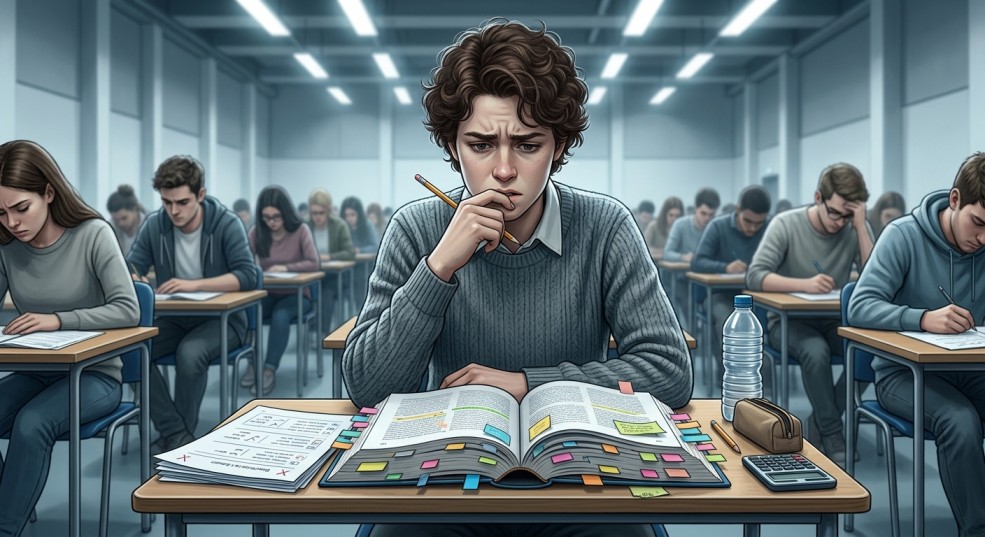
Open-book exams sound easy, but in reality they are often more difficult than traditional exams. The reason is simple: these exams don’t test how much you remember—they test how fast, how well, and how smartly you can use information.
In a normal exam, you rely on memory.
In an open-book exam, you rely on understanding + speed + strategy.
And this combination is not as easy as it looks.
Why Open-Book Exams Are Actually Hard
Let’s clear the biggest myth first.
❌ Myth: You don’t need to study
✔ Reality: You need to study MORE smartly
Open-book exams are difficult because:
1. Time is Your Biggest Enemy
You might think books solve everything—but they don’t.
Searching answers in books takes time, and exam time is limited.
👉 If you don’t know where information is, you lose marks.
2. Information Overload Problem
Books are full of content.
But exam answers require:
- Specific points
- Direct explanations
- Relevant examples
👉 Too much information becomes confusing.
3. Questions Are Designed Differently
Teachers don’t ask direct questions in open-book exams.
They ask:
- Analytical questions
- Application-based questions
- Scenario questions
👉 You can’t just copy-paste answers.
4. Students Waste Time Searching Instead of Writing
Many students spend:
- Too much time flipping pages
- Searching exact lines
- Reading unnecessary paragraphs
👉 Result: incomplete paper
The Real Skill Tested in Open-Book Exams
Open-book exams test 4 major skills:
✔ Understanding
Do you actually understand the topic?
✔ Navigation
Can you quickly find information?
✔ Selection
Can you pick the correct points?
✔ Presentation
Can you write clear, structured answers?
👉 This is not memory-based testing—it is skill-based testing.
Step 1: Don’t Start Without a Strategy
Most students enter open-book exams with a wrong mindset:
❌ “Book open hai, sab mil jayega”
Instead, your mindset should be:
✔ “Mujhe exact information fast locate karni hai”
Before the exam:
- Understand syllabus structure
- Identify important topics
- Mark key chapters
👉 Preparation starts before the exam hall.
Step 2: Organize Your Books Like a Tool, Not a Library
Your book is not for reading during exam.
It is a tool for quick answers.
Do this before exam:
- Use sticky notes
- Highlight important headings
- Mark formulas or definitions
- Create index tabs
👉 Your goal is FAST navigation.
Step 3: Understand the Question First, Always
A very common mistake:
Students immediately start searching in books.
Wrong approach.
Correct approach:
✔ Read question
✔ Understand demand
✔ Decide answer structure first
👉 Only then open the book.
Step 4: Use Keyword Strategy (Very Important)
Open-book exams are like searching Google.
You don’t search full sentences—you search keywords.
Example:
If question is about “causes of inflation”
Don’t search:
❌ full paragraph
Search:
✔ inflation causes
✔ economic factors inflation
👉 This saves huge time.
Step 5: Don’t Copy, Extract
This is the biggest scoring mistake students make.
❌ Copying paragraphs
❌ Writing word-to-word from book
Examiners don’t want that.
They want:
✔ Understanding
✔ Explanation
✔ Structured answer
👉 Your answer should look like YOUR thinking, not book copy.
Step 6: Time Management is Everything
A smart open-book exam strategy:
Divide time like this:
- 10–15% → Understanding questions
- 40% → Searching information
- 45% → Writing answers
If you spend too much time searching:
👉 You will fail to complete paper
Step 7: Write Structured Answers
Even in open-book exams, structure matters a lot.
Use:
✔ Introduction
✔ Main Points
✔ Explanation
✔ Conclusion
This makes your answer:
- Clear
- Professional
- Easy to mark
Step 8: Avoid Overconfidence
Most students fail open-book exams because of overconfidence.
They think:
- “Book hai, time hai, easy hai”
But reality:
👉 Questions are tricky
👉 Time is limited
👉 Searching takes effort
Step 9: Practice Before Exam Day
Yes, even for open-book exams you must practice.
Do mock tests:
- Use book while solving
- Practice finding answers quickly
- Train yourself under time pressure
👉 This builds real exam speed.
Step 10: Mark Important Pages in Advance
Before exam:
✔ Identify chapters
✔ Mark pages with sticky notes
✔ Highlight definitions
✔ Create mental map of book
👉 This reduces search time drastically.
Common Mistakes Students Make
1. Reading Instead of Searching
Books are not meant to be read during exam.
2. Panic Searching
Students flip pages randomly.
👉 Waste of time
3. Writing Too Much
More writing ≠ more marks
4. Ignoring Question Demand
They answer what they know, not what is asked.
Smart Student Strategy
Top students don’t:
- Memorize everything
- Read everything
They:
✔ Understand structure
✔ Mark important areas
✔ Practice searching speed
✔ Write selective answers
👉 They use books like tools, not textbooks.
Psychological Trick That Helps a Lot
Stay calm when you can’t find answers immediately.
If you panic:
- You lose focus
- You waste time
- You make mistakes
👉 Calm mind = faster searching
Final Exam Hall Strategy (Step-by-Step)
- Read full paper
- Select easiest questions first
- Mark difficult ones
- Search keywords in book
- Write structured answers
- Keep checking time
Final Conclusion: The Truth About Open-Book Exams
Open-book exams are not easy. In fact, they are designed to test your:
👉 thinking speed
👉 understanding level
👉 information handling ability
Books are available—but marks are not given for reading books.
They are given for:
✔ smart searching
✔ correct understanding
✔ clear writing
Final Line You Should Remember
👉 “Open-book exams don’t test your memory—they test your strategy.”
If you treat books like a shortcut, you will fail.
If you treat books like a tool, you will succeed.
📚 HOW TO PREPARE FOR OPEN-BOOK EXAMS (FAQ STYLE)
(YE EXAMS ASAN NAHIN HOTE — SMART PREPARATION CHAHIYE)
❓ Q1: OPEN-BOOK EXAM HOTA KYA HAI?
✔ Open-book exam mein aapko books, notes ya material use karne ki permission hoti hai
✔ Lekin iska matlab yeh nahi ke aap direct answers copy kar lo
✔ Questions zyada tar conceptual, analytical aur application based hotay hain
❓ Q2: KYA OPEN-BOOK EXAM EASY HOTA HAI?
❌ NAHIN!
✔ Yeh exams aksar closed-book se zyada tough hotay hain
✔ Kyun? Kyun ke time kam hota hai aur thinking zyada karni hoti hai
❓ Q3: PREPARATION KA SAB SE IMPORTANT STEP KYA HAI?
✔ BOOK KO RANDOM NAHIN KHOLNA — SYSTEMATIC STUDY KARO
👉 Har chapter ko samjho
👉 Important topics mark karo
👉 Concepts clear rakho (ratta mat lagao sirf)
❓ Q4: NOTES KAISE BANAYEIN?
✔ Short & smart notes banao
✔ Headings + keywords use karo
✔ Diagrams / flowcharts add karo
✔ Har topic ka 1-page summary best hota hai
❓ Q5: EXAM ME TIME MANAGEMENT KAISE KARAIN?
✔ Pehle paper ko 5–10 min scan karo
✔ Easy questions pe start karo
✔ Hard questions ko end ke liye rakho
✔ Time divide karo (har question ka limit set karo)
❓ Q6: BOOK KA USE KAISE KARNA CHAHIYE EXAM ME?
✔ Book ko “search tool” ki tarah use karo
❌ Poora answer dhoondne mat beth jao
✔ Sirf keywords aur relevant sections dekho
✔ Pehle apna answer likhne ki koshish karo, phir book se support lo
❓ Q7: KIS TYPE KI PREPARATION BEST HOTI HAI?
✔ Concept-based understanding
✔ Practice questions solving
✔ Past papers analysis
✔ Important topics ki marking
❓ Q8: COMMON MISTAKES KYA HOTI HAIN?
❌ Sirf book pe depend karna
❌ Notes na banana
❌ Practice na karna
❌ Time waste karna search mein
❓ Q9: FINAL EXAM STRATEGY KYA HONI CHAHIYE?
✔ Calm raho
✔ Structured answers likho
✔ Headings use karo
✔ Points mein answer do (paragraph overload nahi)
🎯 FINAL TIP
👉 Open-book exam ka matlab “open-book + closed-mind” nahi hota
👉 Yeh test hota hai samajh, speed aur application ka